
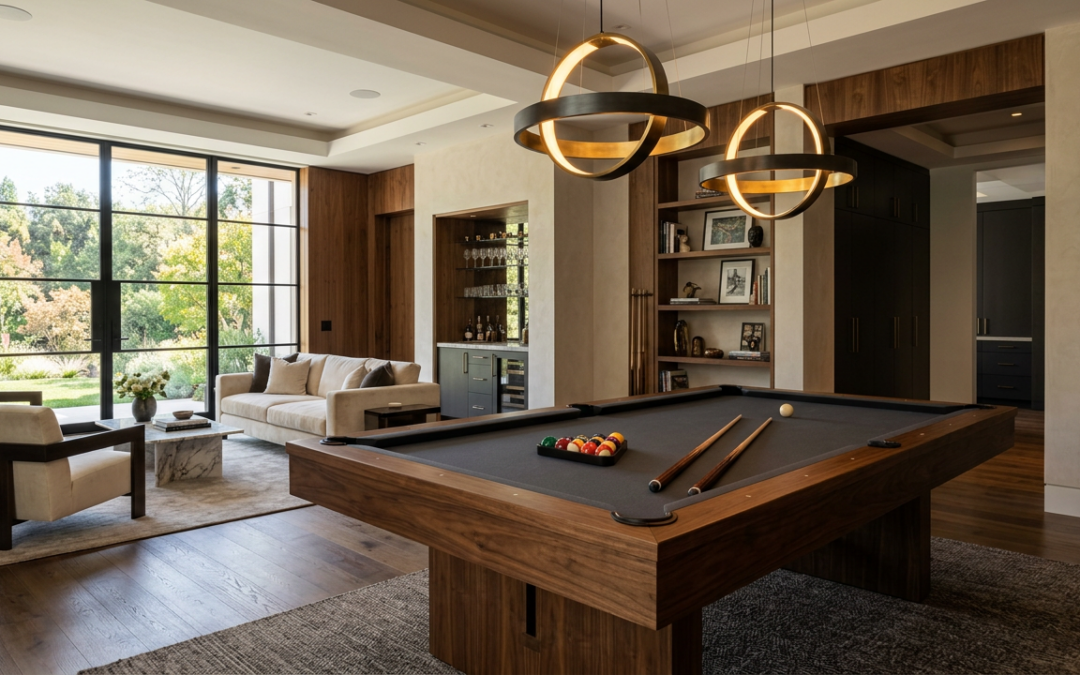
How to Choose a Custom Pool Table Finish That Fits Your Room
A luxury pool table finish should do more than look attractive on a sample board. It needs to relate to the room’s light, surrounding materials, daily use, and the visual role the table will play for years to come.
When we help clients choose a custom pool table finish, we begin with the architecture rather than a favorite stain color. The strongest selections coordinate wood, metal, cloth, flooring, cabinetry, and lighting into one composed design, while still giving the table enough presence to feel like statement furniture.
Start With the Room’s Material Story
The best finish is one that belongs in the room, not one that merely matches a single cabinet or floor. Look first at the dominant materials, then decide whether the pool table should blend quietly into them or provide intentional contrast.
A useful order of operations is to review flooring, wall color, millwork, stone, metal hardware, upholstery, and lighting. Bring photographs, finish schedules, elevations, and physical samples to the discussion whenever possible. Digital images can shift undertones dramatically, particularly with warm woods, painted finishes, and dark metals.
| Room Character | Finish Direction | Metal Pairing | Cloth Direction |
|---|---|---|---|
| Warm contemporary | Straight-grain walnut or oak | Brushed bronze or black | Deep olive, charcoal, camel |
| Coastal modern | Light oak or pale natural wood | Brushed aluminum | Soft blue, sand, graphite |
| Urban penthouse | Black oak or dark walnut | Satin black or polished metal | Charcoal, burgundy, slate |
| Classic estate | Rich walnut or expressive grain | Aged bronze or dark metal | Forest green, navy, wine |
For example, a home with pale oak flooring and limestone may benefit from a light, linear wood finish that keeps the composition calm. A darker wenge or black oak table can also work beautifully there, but it should be repeated elsewhere through black window frames, art, lighting, or hardware so it feels intentional rather than isolated.
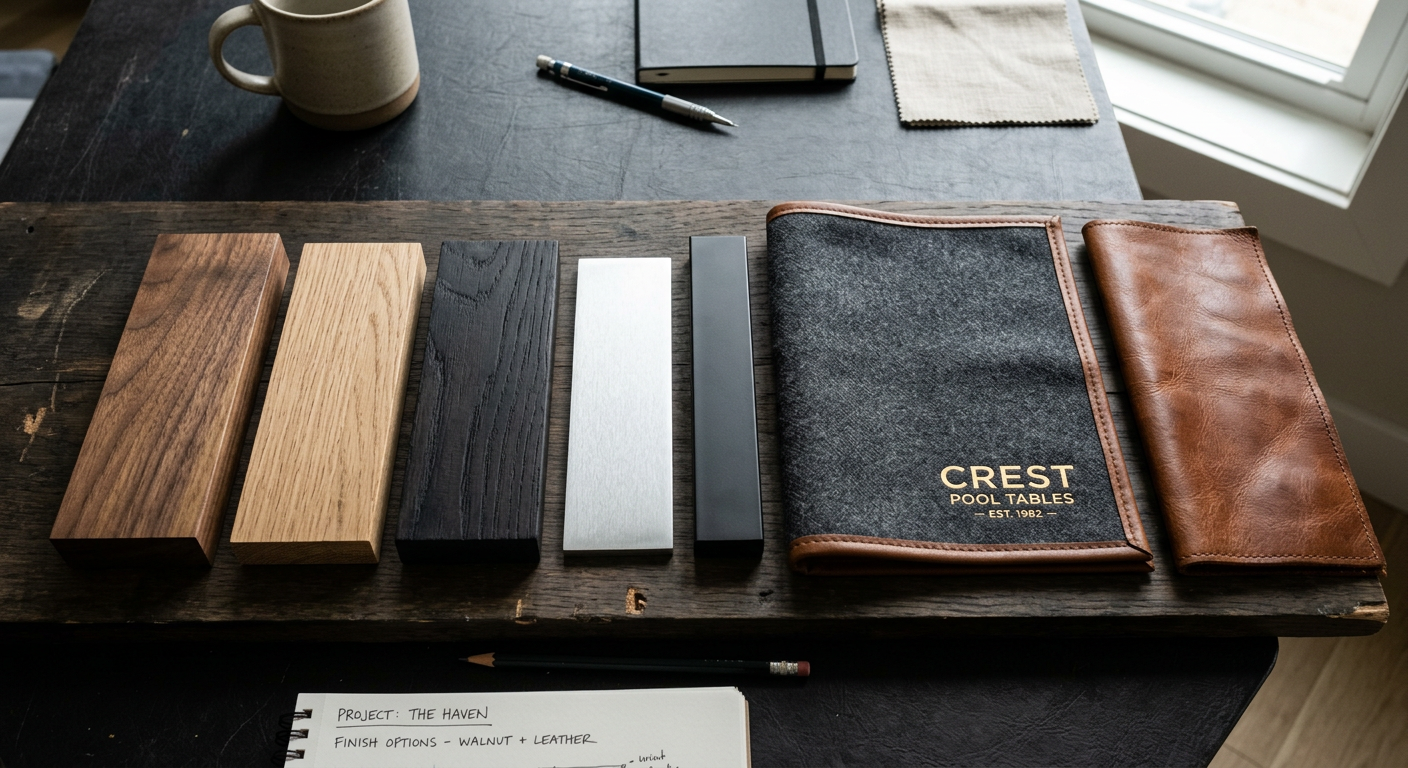
Evaluate Wood Tone Before Choosing a Sheen
Wood tone establishes the table’s visual temperature, while sheen controls how that tone behaves in the room. Decide on the wood direction first, then refine the level of reflectivity.
Light oak and pale natural finishes usually create an airy, architectural feeling. They are especially effective in contemporary homes with restrained palettes, wide-plank floors, plaster walls, and abundant daylight. Straight-grain patterns tend to look tailored and calm, while more expressive crown grain makes the wood a focal feature.
Walnut brings warmth and depth without automatically making a room feel traditional. It can connect a pool table to paneled walls, leather seating, bronze accents, or darker cabinetry. For a more dramatic result, black oak and wenge create a strong silhouette, particularly when paired with light walls or lighter cloth.
The Brilliant Billiards materials and finishes collection illustrates how grain, tone, decorative aluminum, and satin-black metal can each shape a table’s character. White oak straight grain offers a quiet, light interior direction, while walnut and darker woods create more contrast and visual weight.
Choose Sheen for Light, Texture, and Maintenance
Sheen changes the appearance of a finish as much as color does. A matte or low-luster surface feels softer and more architectural, while a higher-sheen finish catches light and creates a more formal, polished presence.
Sherwin-Williams explains that gloss and sheen affect the amount of light reflected from a surface, which can materially change how color is perceived from different angles. Their measurement scale runs from 0, meaning no gloss, to 100, meaning mirror-like reflection. That principle matters for furniture-scale pieces as much as it does for walls and millwork.
Matte and Low-Luster Finishes
Low-luster finishes suit modern, organic, and understated interiors. They minimize reflections from large windows and decorative lighting, allowing grain and form to take center stage. They are often the right choice for rooms with textured plaster, rift-cut wood cabinetry, natural stone, or soft furnishings.
The tradeoff is that very low sheen can show hand oils or scuffs more readily on heavily used rails if the coating system is not selected for durability. The answer is not automatically more gloss. It is a high-performance finish specified for the project’s actual use.
Satin Finishes
Satin is often the most flexible choice for a custom billiard table. It has enough reflectivity to give wood depth and metal details definition, without behaving like a mirror under pendant fixtures or sunlight.
For many luxury residences, satin provides the best balance of sophistication, practicality, and compatibility with evolving decor. It also works across styles, from tailored transitional rooms to crisp contemporary lounges.
High-Gloss and Polished Finishes
High-gloss finishes are visually powerful and best used with purpose. They can make a dramatic statement in a formal entertaining room, private club, or hospitality setting, especially when the surrounding architecture includes lacquered cabinetry, polished stone, or reflective metal.
They are also less forgiving. Reflections highlight fingerprints, dust, and imperfections, while direct sun can make the finish visually busy. Use a glossy surface when the room supports it, not simply because gloss feels expensive.
Match Durability to How the Table Will Be Used
A finish choice is an engineering decision as well as a design decision. A table used for weekend family play, frequent entertaining, or commercial hospitality needs a more protective surface than one placed in a formal lounge with occasional use.
The U.S. Department of Energy notes that color and finish influence reflectance and visual comfort. Its guidance shows estimated reflectance of 54 percent for maple and 23 percent for oak in flat finishes, while glossy finishes can add 5 to 10 percent reflectance. In practical terms, a pale or glossy table may feel significantly brighter in a sun-filled room, while a dark matte table will read as quieter and more grounded. Read the Department of Energy guidance.
Consider these project conditions before finalizing a finish:
- Direct sunlight: Specify UV-conscious materials and use window treatments or UV-filtering glass where appropriate.
- Frequent entertaining: Prioritize durable coatings that stand up to handling, drink spills, and regular cleaning.
- Children or pets: Choose finishes that can be maintained and repaired without turning a small mark into a full refinishing project.
- Hospitality or club use: Use hard-wearing wood and metal finishes designed for repeat contact and professional cleaning.
- Coastal or humid locations: Account for the broader environment, especially where metal accents and delivery conditions require additional attention.
A durable finish does not need to look industrial. The goal is to specify the right coating, substrate, sheen, and maintenance plan for the way the room will actually live.
Coordinate Wood, Metal, Cloth, and Pocket Details
A pool table is not one finish. It is a composition of wood or veneer, metal, cloth, leather or synthetic pocket components, rail details, and often custom inlays or accents.
Start by choosing the primary material, then assign each secondary material a clear job. A warm walnut body with brushed aluminum details reads differently than the same walnut with satin-black metal. The first approach is lighter and more architectural. The second is moodier and more tailored.
Cloth should support the finish rather than compete with it. Charcoal cloth can give light oak a crisp, contemporary edge. Olive or deep blue can enrich walnut. Burgundy and forest green lend classic character, though they are strongest when the room includes enough traditional detail to carry them.
For a table that will also host poker or cards, plan the full experience early. A pool table and poker table combo begins as a premium rectangular six-pocket pool table and converts using a fully customizable removable neoprene poker overlay. The overlay protects the billiard cloth, creates a smooth surface for cards and chips, and can be customized with colors, player positions, monograms, logos, or property graphics. Its color and graphic treatment should be coordinated with the table finish and room palette, not selected as an afterthought.
Use Physical Samples in the Actual Room
Physical samples in the intended room are the most reliable way to choose a custom pool table finish. View them in daylight, at night, under decorative lighting, and beside the surfaces they need to complement.
Ask to see the wood or veneer against flooring, stone, paint, cabinetry, and upholstery. Hold metal samples near lighting fixtures and hardware. Place cloth swatches near the proposed wood finish, then step back several feet. What looks refined in your hand may become too dark, too yellow, too gray, or too reflective at furniture scale.
We also recommend evaluating samples from more than one viewing angle. Gloss and color perception shift as you move through the room. This is particularly important in open-plan spaces, rooms with large glass walls, and areas that transition from daylight entertaining to evening play.
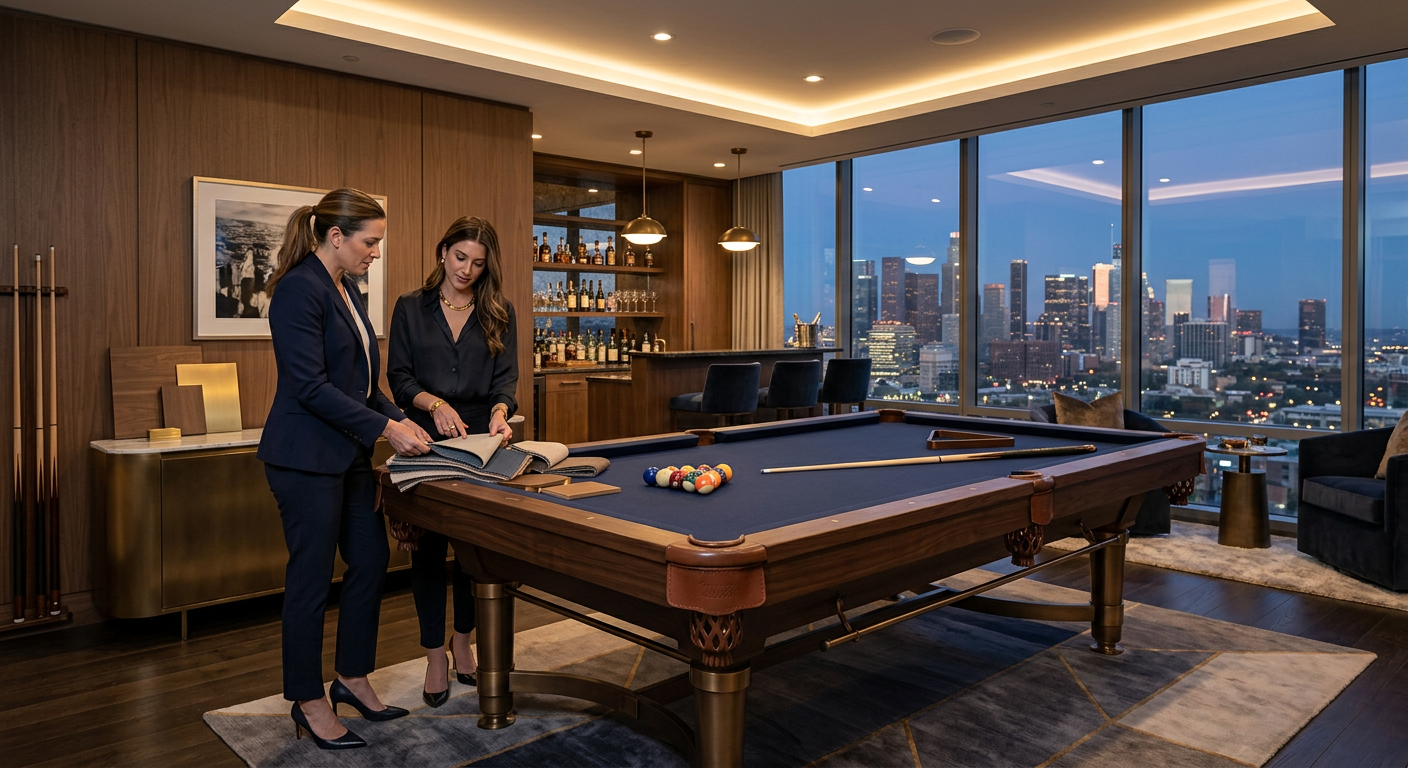
Build Finish Decisions Into the Full Project Plan
Finish selection should happen early enough to influence production, room planning, delivery, and installation. It should never be treated as a decorative decision made after dimensions, materials, and access conditions have already been locked.
The most efficient process is to review the floor plan, cueing clearances, furniture layout, and intended use alongside the finish palette. Then confirm the table size, form, materials, cloth, and personal details in one written specification. The custom pool table investment process is built around that sequence, including physical sample review, room coordination, and delivery planning.
For a sculptural modern profile, it can also help to choose the table form before narrowing finishes. The Ace custom pool table is a clean four-leg design where grain direction, cloth, and metal details are especially visible. A more architectural or cantilevered form may call for different contrasts and material proportions.
Common Finish Mistakes to Avoid
The most expensive finish mistake is choosing from a tiny sample without considering the complete room. Avoid these common shortcuts:
- Matching the floor exactly, which can make a large table disappear or look overly coordinated.
- Choosing a dark finish in a low-light room without balancing it with lighter cloth, walls, or upholstery.
- Selecting high gloss before testing reflections from windows and lighting.
- Treating metal accents as minor details when they may be repeated throughout the room.
- Prioritizing appearance without discussing sunlight, use patterns, maintenance, and repairability.
- Selecting poker-overlay colors independently from the table’s wood, cloth, and surrounding furniture.
A custom table deserves a finish specification with the same level of attention given to stone, cabinetry, or architectural lighting.
Questions Buyers Ask About Custom Pool Table Finishes
Should a pool table match the floor or contrast with it?
It should usually relate to the floor without matching it exactly. A slight shift in tone, grain, or sheen keeps the table visually distinct while preserving a cohesive room palette.
Is a matte pool table finish durable enough for a busy home?
Yes, provided the underlying coating system is specified for regular handling and cleaning. Matte describes appearance, while the coating technology and application determine much of the durability.
What finish works best near large windows?
A low-luster or satin finish is usually easier to live with near large windows because it controls reflections. Choose UV-conscious materials, and evaluate samples in direct daylight before confirming the specification.
Can we mix wood and metal finishes on one table?
Yes. Combining wood with brushed aluminum, satin-black aluminum, bronze-toned metal, or other architectural accents can make the table feel more connected to the home’s hardware and lighting.
How should the poker overlay relate to the pool table finish?
The overlay should be part of the full palette. Its color, layout, player positions, monogram, or graphics can reinforce the room’s design while maintaining a clear distinction from the billiard cloth beneath it.
Will a darker wood finish make a room feel smaller?
Not necessarily. Dark wood adds visual weight, but it can feel exceptionally refined when offset by lighter walls, thoughtful lighting, and enough open circulation around the table.
Start Your Finish Selection With the Whole Room in View
A lasting finish decision comes from seeing the pool table as part of a complete interior, not as an isolated product. Wood tone, grain, sheen, metal, cloth, lighting, and long-term use all deserve a place in the conversation.
Brilliant Billiards designs luxury custom pool tables around the room, the way you entertain, and the materials that define your home or project. To discuss samples, dimensions, finish direction, and nationwide delivery and professional installation, visit Brilliant Billiards, call (602) 845-8988, or book a private design call.
The Right Finish Makes the Table Feel Inevitable
The ideal custom pool table finish feels considered from every angle and under every kind of light. It supports professional play, withstands the life of the room, and gives the table the presence of true furniture rather than a standalone game-room purchase.
Choose based on the complete setting, review real samples before approving anything, and balance visual impact with serviceability. That process creates a table that remains convincing long after the first impression has passed.


