
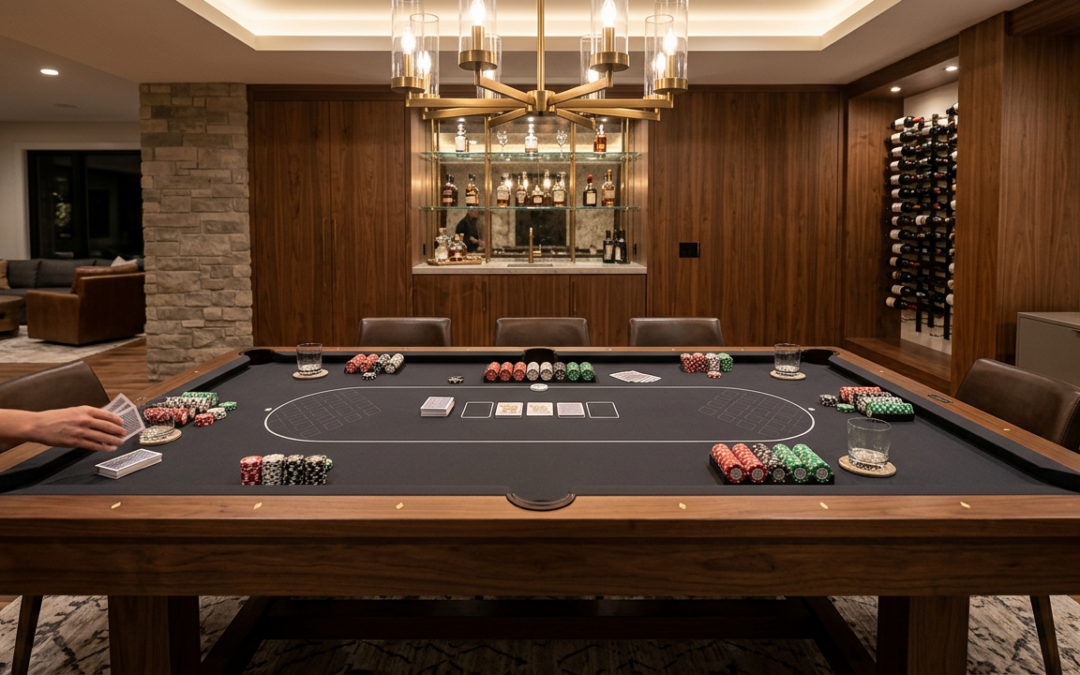
A great game room should not force you to choose between billiards and card night. With the right conversion approach, one authentic six-pocket pool table can become a comfortable, polished poker surface without compromising the table’s playability or asking the room to accommodate a second oversized piece of furniture.
The best answer to how to convert a pool table into a poker table is not a permanent rebuild. It is a thin, fully customizable removable neoprene poker overlay placed directly over the billiard cloth. The overlay protects the playing surface, gives cards and chips a smooth surface, and lifts away easily when it is time for billiards again.
How to Convert a Pool Table Into a Poker Table for Game Night
How to Convert a Pool Table Into a Poker Table Without Sacrificing Billiards
The conversion should preserve the pool table first, then add a refined surface for cards only when needed. A true dual-purpose table remains rectangular, has exactly six pockets, and retains proper rails, cushions, cloth, and leveling for serious play.
The process is straightforward:
- Clear balls, cues, racks, and accessories from the table.
- Brush the billiard cloth lightly so the surface is clean and free of chalk or debris.
- Align the removable neoprene poker overlay over the playing area.
- Smooth it from the center outward so it lies flat and does not bunch near the rails.
- Arrange cards, chips, drinks on side tables, and seating for the evening.
When the game is over, lift the overlay away, roll or store it according to its specifications, and the table is ready for billiards. No hinges, hardware, permanent adhesive, or bulky wood panel should be required.
A high-quality overlay changes the feel of the table without changing its construction. The rails remain visible around the perimeter, creating a natural boundary for chips and cards while keeping the proportions of a real billiard table intact.
Why a Neoprene Poker Overlay Is the Right Conversion Surface
A flexible neoprene overlay is the most practical way to create a card-playing surface because it protects the cloth while remaining lightweight and easy to remove. It provides a smooth, low-friction surface for dealing, sliding cards, stacking chips, and gathering players around the table.
Unlike a rigid poker topper, a neoprene overlay does not turn the table into a permanent card table or create a storage problem between gatherings. It can be made to fit the table’s playing surface and visual character, then stored neatly when the room returns to billiards.
For a deeper look at the format, explore luxury pool table and poker table combinations. The key distinction is simple: the pool table should be a genuine billiard table first, not a poker table attempting to imitate one.
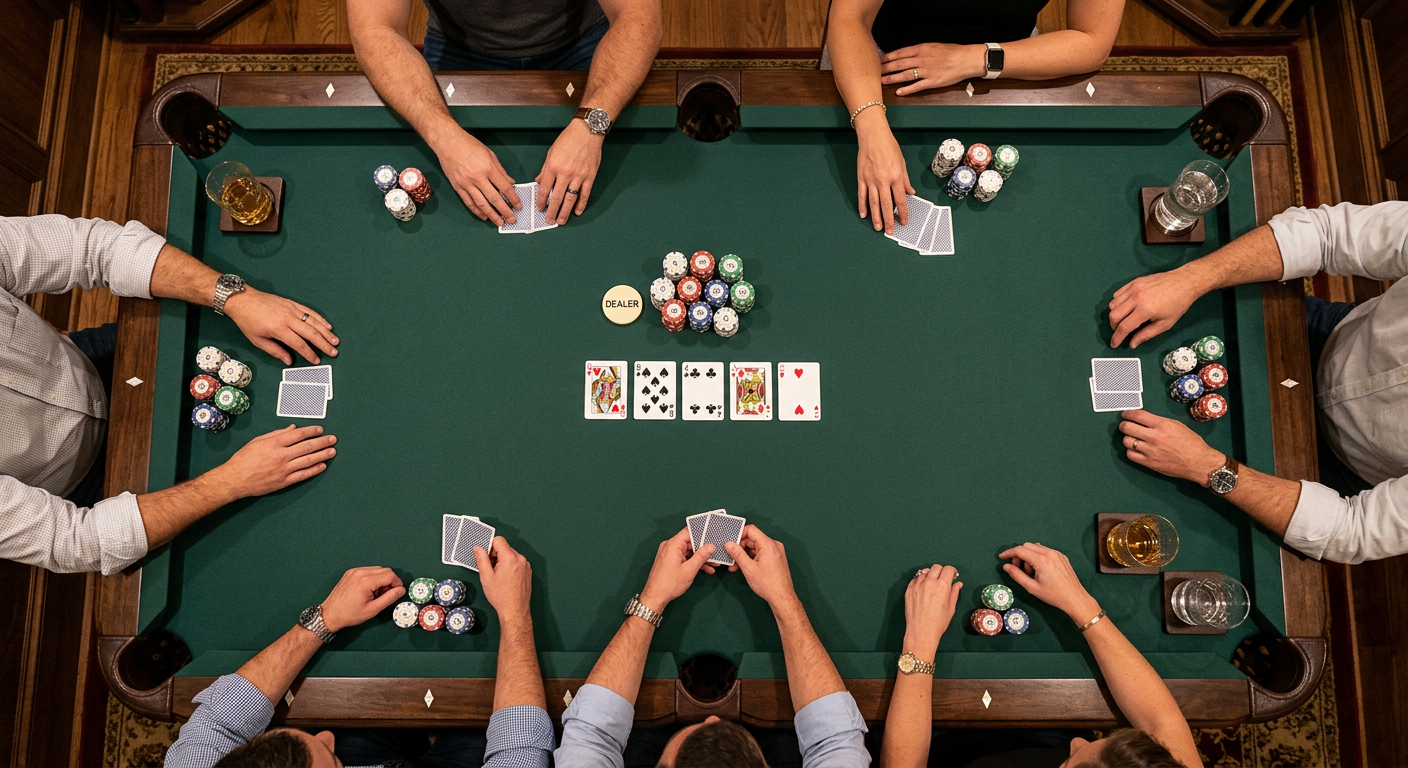
What the Overlay Can Be Customized to Include
The poker surface can be quiet and residential or designed with more personality for a private club, executive office, hospitality suite, or vacation property. Custom details can include:
- Overlay color and edge treatment
- Player positions and seating layout
- Betting lines and dealer areas
- Card-placement guides
- Monograms, family names, or property names
- Private-club or company logos
- Original graphics coordinated with the room
Customization works best when it supports the interior rather than overwhelming it. A subdued graphite, deep green, navy, or warm neutral surface often gives the room a composed look, while a more graphic layout can suit a dedicated entertaining space.
Start With a Pool Table That Can Support Both Uses
A successful conversion depends on the quality and proportions of the table underneath it. A table that flexes, lacks accurate leveling, has poor cushions, or provides limited rail clearance will not become more enjoyable simply because a poker surface is placed on top.
We recommend planning the billiard and poker functions together from the beginning. Consider the overall footprint, rail treatment, legroom, chair height, upholstery, and how guests will circulate through the space. A pool table can perform beautifully for cards, but it still needs to function as furniture when nobody is playing.
The 2026 American Gaming Association report noted that traditional games at 493 commercial casino locations generated $51.06 billion in 2025. For private entertaining, the takeaway is not about recreating a casino. It is about creating a table where people actually want to gather, linger, and host a memorable evening.
Room Planning Matters More Than Most Buyers Expect
Billiards requires cueing clearance around the table. Poker requires enough room for seated guests, chairs moving in and out, and a clear path for service or conversation. Plan both activities before finalizing table size.
For example, an intimate library or lounge may favor a smaller table and four to six poker positions. A larger entertainment room may support a full-size pool table, more expansive circulation, and eight or more card players. The right decision comes from the room plan, not from selecting a size in isolation.
The custom pool table planning process is designed around these details, including measurements, intended games, working budget, access requirements, and installation coordination.
Design the Table as a Statement Piece, Not a Compromise
A dual-purpose table should look intentional in both modes. The most compelling projects treat the pool table as architectural furniture, then use the poker overlay to introduce a second layer of hospitality without adding visual clutter.
Material selection shapes the result. Wood veneer can bring warmth to a library, club room, or traditional estate. Brushed aluminum can complement a penthouse or contemporary office. Architectural laminates may suit tonal, textural interiors where the table needs to connect with cabinetry, stone, or wall finishes.
Reviewing finish samples in the actual room is especially important. Lighting changes the appearance of wood grain, metal sheen, felt color, and overlay color throughout the day. The materials and finishes library provides useful starting points for coordinating those elements.
For commissioned luxury projects, Brilliant Billiards builds the conversion into the overall design conversation, including the table’s dimensions, finish direction, poker layout, delivery conditions, and professional installation. That avoids the common mistake of treating the card-playing surface as an afterthought.
What to Avoid When Converting a Pool Table for Poker
The wrong conversion can make both games less enjoyable. Avoid options that burden the table, cover its character, or permanently interfere with billiard performance.
Heavy Rigid Covers
A thick, rigid panel can be cumbersome to lift, difficult to store, and visually disconnected from the table. It may also make the surface feel artificially elevated and less welcoming for seated card play.
Permanent Printed Playing Surfaces
Permanent graphics lock the table into one use and can diminish its flexibility as luxury furniture. A removable overlay gives the room more freedom and lets the poker experience evolve with the owner’s preferences.
Poorly Fitted Generic Mats
An ill-fitting mat may curl, slide, or leave areas of the billiard cloth exposed. A made-to-measure overlay should sit cleanly across the playing area and work naturally with the rails.
Forgetting Seating and Service
Poker is social, so the surrounding space matters. Choose chairs that offer comfortable seat height and adequate legroom. Place drinks and food on nearby side tables rather than on the playing surface, and use lighting that helps guests read cards without creating glare.
What a Luxury Pool and Poker Project Can Cost
Investment depends on the table design, dimensions, materials, level of customization, access conditions, and installation requirements. A luxury pool table poker table combo is a furniture and performance decision, not a simple accessory purchase.
At Brilliant Billiards, custom commissions begin at $25,000, with many tailored projects planned around $45,000. More extensive engineering, rare materials, or architectural integration can place a project at $65,000 or more. The final proposal should clearly define the table specification, conversion details, transportation, and professional installation scope.
That level of planning is valuable for homeowners, designers, and builders who want a table that fits the room for years, rather than a short-term solution that must be worked around.
Questions About Pool Table Poker Conversions
Can any existing pool table become a poker table?
Many existing tables can support a removable card-playing overlay, but suitability depends on the playing-surface dimensions, rail profile, table condition, and desired fit. Measure the playing area carefully before commissioning an overlay.
Does a neoprene overlay damage billiard cloth?
No, a properly made removable neoprene overlay is intended to sit over and help protect the cloth during card play. We still recommend keeping the cloth clean and dry before positioning it.
Will the poker overlay make the table feel too high?
A thin neoprene surface adds minimal height compared with rigid conversion panels. The table remains comfortable for seated poker when chair height and legroom have been planned appropriately.
How many people can play poker around a converted pool table?
That depends on the table size, chair style, and room circulation. Many home setups work well for six to eight players, while larger spaces can accommodate a more expansive layout.
Can we add a monogram or custom poker layout later?
Yes. A removable overlay can be updated independently of the pool table, allowing a new monogram, logo, color direction, or player layout without altering the billiard table itself.
Is professional installation necessary?
Professional installation is strongly recommended for a luxury pool table because accurate leveling, access planning, and final positioning affect billiard performance. The overlay itself is simple to position once the table is installed and ready for use.
Plan a Table That Hosts Both Games Beautifully
If your room needs one exceptional table that can host billiards, poker, bridge, blackjack, and conversation, begin with the space rather than a standard product. We can help you evaluate table size, materials, room flow, overlay design, budget, and the delivery requirements for your property.
Visit Brilliant Billiards to begin a private design conversation, call (602) 845-8988, or book a call to discuss your project.
The Best Conversion Keeps the Table’s Purpose Clear
The most elegant solution is also the simplest: preserve a real six-pocket pool table for billiards, then add a thin removable neoprene overlay when the evening calls for cards. That approach protects the cloth, maintains professional playability, and gives one beautiful piece of furniture two distinct roles.
When the table, overlay, seating, and room plan are designed together, a game room becomes more than a place to play. It becomes a setting for the kind of gathering people remember.


