
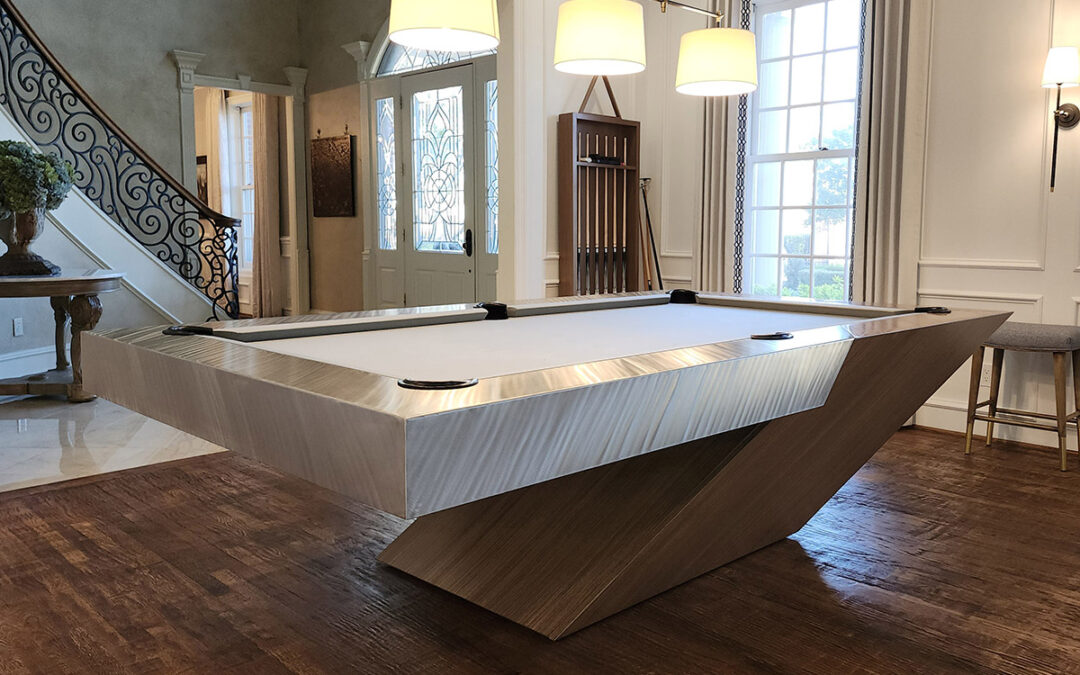
Every high-end game room starts with a materials decision, because the feel, sound, and longevity of a table come from what it is made of. For affluent homeowners, architects, and interior designers seeking luxury custom pool table materials, the choice is not just technical, it is part of the design brief. Our clients include private estate owners, penthouse developers, country clubs, and boutique hospitality venues that value craftsmanship, exclusivity, and functional art. They choose Brilliant Billiards for timeless design, precision engineering, and elevated interiors. On Day 1 in an early stage business, you learn fast that material choices set expectation, price, and the lifetime story of the piece.
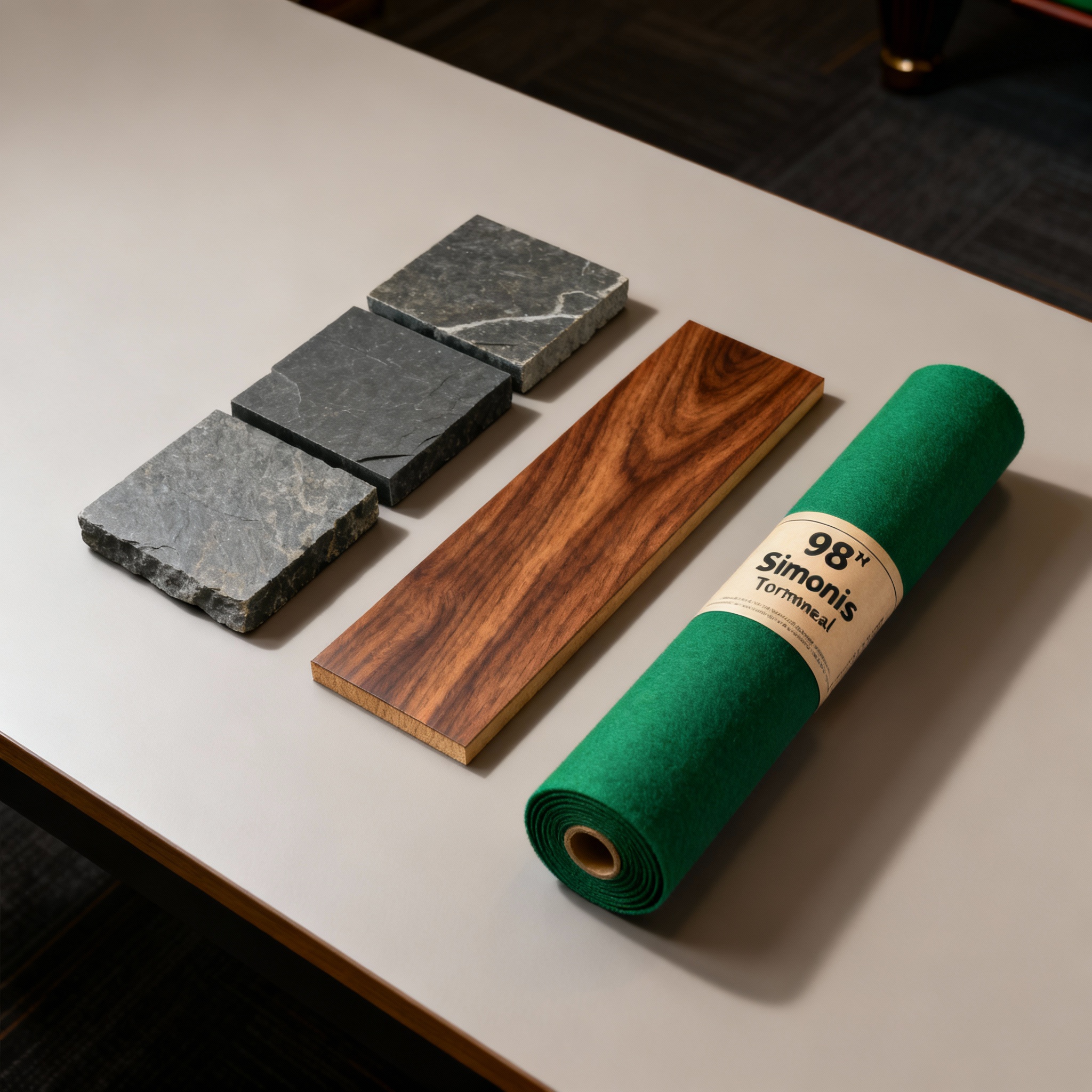
Why Materials Matter
If you want museum-quality presence plus pro-level playability, materials are everything. Here’s the thing, a table can be a stunning sculptural object, but if the slate warps, the cushions deaden, or the cloth pills, that sculptural object stops being fun. Below are the components that define performance, longevity, and luxury.
Choosing Custom Pool Table Materials
Slate: the foundation of play
- What it does: Slate is the rigid playing surface that gives consistent roll and reliable ball response. Professional and tournament tables use multi-piece natural slate because it machines flat and stays flat. For technical detail and expectations about slate thickness and multi-piece construction, see industry examples. Predator’s product pages and other premium manufacturers explain common slate specs and 3-piece slate construction.
- Typical specs: 3-piece slate for easier transport and precision leveling, commonly 25 mm to 30 mm thickness on many pro-style tables. Thicker slate increases stability and weight, and reduces the chance of localized flex. Premium builders will specify tolerances in fractions of a millimeter. For a concise explanation of why slate outperforms alternatives, read a technician’s breakdown. DFW Billiard Pros discuss practical reasons builders prefer slate.
- Trade-offs: Slate adds substantial weight and requires professional setup, but the payoff is lifetime-accurate play.
Cloth: speed, color, and atmosphere
- Why it matters: Cloth determines table speed, ball spin response, and the finished look. The industry standard for tournament-grade cloth is woven worsted wool blends, selected for consistency and low pilling.
- Pro choice: Simonis cloth is a top-tier example used in clubs and tournaments for its tight weave and durability. Simonis 760 and 860 are common references when clients ask for a fast, consistent surface.
- Aesthetic choices: Cloth color changes the visual temperature of a room. Emerald or deep blue reads classic, slate gray or black reads modern. Pick color as you would a rug: it should tie to lighting and finishes.
Rails, Cushions, and Pocket Systems
- Cushions: Gum rubber profiles like K66 and K55 affect rebound angle and feel. Most modern home tables use K66 profiles for fast, predictable play. If you want exact dimensions and profile differences, see a cushion guide. Detailed cushion profiles and measurements are available from specialty suppliers.
- Rails and pockets: Rails are often hardwood with laminate or metal inlays. Pocket systems vary from leather drop pockets to silent drop mechanisms. Leather pockets read as handcrafted detail, while engineered drop systems prioritize quiet, commercial use.
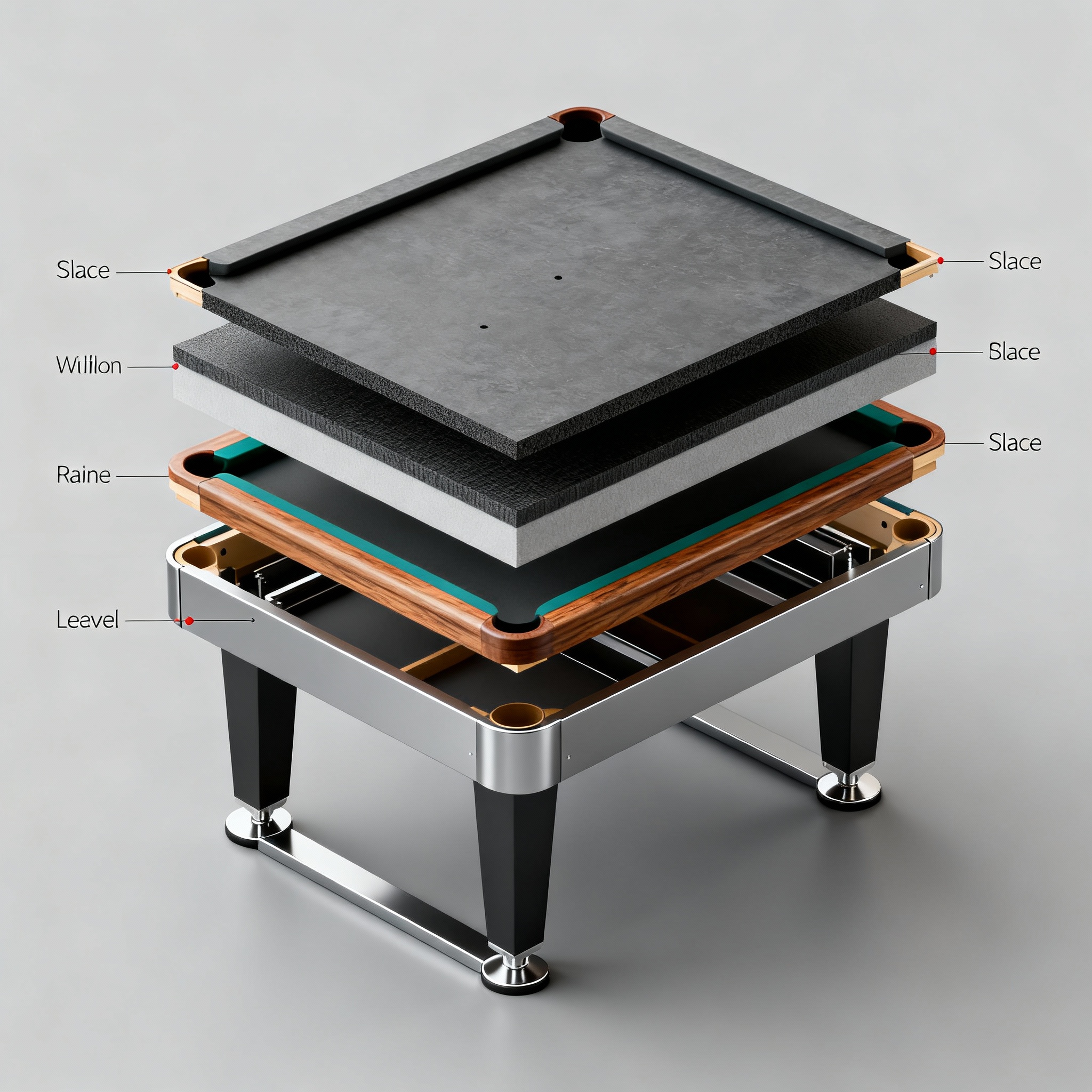
Frame, Wood Species, and Structural Choices
- Structural frame: Heavy-duty steel or robust hardwood frames prevent sag and keep the slate supported. For long spans or cantilever designs, metal members are often integrated to maintain geometry and thin profiles.
- Wood species: Select wood for tone and finish. Walnut, quarter-sawn oak, and mahogany are popular for high-end tables because they machine beautifully and take finish well. If you want modern minimalism, powder-coated steel or brushed stainless structural elements make a clean statement. For a metal-finishes primer, this furniture guide is useful. Perigold’s metal finishes overview covers common options.
- Veneer vs solid: Veneer allows exotic looks at lower cost and more stability against seasonal movement. Solid wood offers depth and heirloom appeal, but needs careful moisture control.
Metal, Finishes, and Custom Details
- Metal choices: Stainless steel, brass, and powder-coated aluminum are common in contemporary designer tables. Brass ages with patina, while stainless reads modern and minimal.
- Finishing methods: PVD, lacquer, or clear polyurethane protect metals and wood finishes. Specify a finish that matches the project’s maintenance profile, whether you want a finish that patinas naturally or one that stays polished.
Leather, Trim, and Small Touches
- Pockets and trim: Full-grain leather pockets add a luxurious tactile note. Copper or brass caps on pocket corners can echo room hardware for cohesion.
- Accessories: Custom racks, cue holders, and matching shuffleboards or game consoles increase perceived value and create a curated game room.
Installation, Leveling, and White-Glove Delivery
Materials determine installation complexity. Slate needs professional assembly and precision leveling. For white-glove deliveries to penthouses, expect coordinated site visits and rigging plans. Brilliant Billiards offers white-glove installations to ensure performance and finish meet expectations. Learn more about model options such as the Optimus cantilever table or the Japanese-inspired Paper Dove for material inspiration.
A Short Customer Story
A designer called asking for a table that read as sculpture but played like a tournament table. We combined a three-piece 25 mm slate, Simonis 760 cloth in deep green, walnut rails with brass inlay, and silent leather pockets. The client wanted the table to feel warm at night and resolute during play. At the reveal, the homeowner ran a rack and then said, “It plays like the club, but it looks like my living room. Exactly what I hoped for.” That combination of materials is a good blueprint when you want both presence and performance.
Practical Decision Checklist
- Performance first: prioritize slate thickness and cushion profile for playability.
- Aesthetics second: choose wood species and metal finishes that match the room palette.
- Maintenance third: pick cloth and leather that clean well, and finishes that age how you expect.
- Logistics: confirm weight, access, and white-glove installation requirements before finalizing a design.
Key Takeaways
- Slate is nonnegotiable if you want pro-level roll and lifetime stability. See why slate is preferred.
- Simonis style worsted cloths remain the benchmark for consistent play and low pilling. Simonis describes their 760 product line and benefits.
- Cushion profiles like K66 influence rebound and feel, and are a practical choice for most home installations. Technical cushion profiles and measurements are documented by specialty suppliers.
Next Steps: Bring Materials Into Your Design
If you are specifying a table for a high-end residence, club, or hospitality space, gather these materials samples early. Invite your fabricator or a specialist to your design review so weight, access, and finish choices are baked into the plan. Want to see real-life material pairings? Review Brilliant Billiards’ collections for ideas, including the Optimus, Paper Dove, and Portside.
Design Consultation and Bespoke Builds
Ready to move from inspiration to a tailored specification? For concierge-level design and white-glove delivery that pairs modern engineering with handcrafted finishes, visit Brilliant Billiards and schedule a consultation. Every table is engineered to balance aesthetic ambition with pro-level performance. Explore more at https://brilliantbilliards.com/ and start your custom design.
Conclusion
Materials are the single biggest design decision for a luxury pool table. Choose them like you would choose stones for a façade: for structure, for weather, for how they age, and for how they make people feel around them. With the right slate, cloth, wood, metal, and installation partner, a custom pool table becomes both a reliable instrument and a showpiece for the home.


